 how-to
Why Restoration Projects Fail During Insurance Approval
Table of Contents
- The Hidden Costs of Approval Delays in Restoration Projects
- Why Insurance Approval Timelines Slip: Five Critical Failure Points
- Building an Insurance Claim Documentation Checklist That Prevents Denials
- Navigating the Insurance Claim Supplement Process When Initial Scope Falls Short
- Using Restoration Project Documentation Software to Prevent Approval Failures
- Responsibility Matrix: Who Owns Each Step of Approval
- Frequently Asked Questions
Last Updated: October 12, 2026
The Hidden Costs of Approval Delays in Restoration Projects
Restoration projects stall. Not because the work is hard, but because the insurance approval restoration process breaks down. A homeowner files a claim. The adjuster inspects. The contractor submits an estimate.
Why restoration projects fail during the insurance approval phase comes down to five predictable failure points. Most teams don't see them coming until a project is already delayed.
The problem isn't complexity. It's documentation gaps, miscommunication, and scope creep that adjusters reject or underfund. When these failures happen, projects don't just slow down, they stall entirely.
Why Insurance Approval Timelines Slip: Five Critical Failure Points
Insurance approval timelines fail because of broken handoffs between three parties: homeowner, contractor, and adjuster. Each one owns a piece of the process. When any piece is missing, the whole timeline breaks.
Incomplete Damage Assessment and Documentation
The first failure point happens before the adjuster even arrives. A contractor walks the property, takes photos, and makes notes. But the documentation is incomplete. Photos lack detail. Notes skip important areas.
Now the scope is wrong. The estimate doesn't match what's actually damaged. The adjuster requests a supplement.
What matters: Document every damaged surface. Use close-up photos. Note the extent of damage in writing. Capture before-and-after comparisons where possible. Missing documentation here costs weeks later.
Scope Gaps That Adjusters Reject or Underfund
An estimate gets submitted. The adjuster reviews it and finds items missing. Maybe the estimate didn't include structural damage. Maybe it missed secondary water damage in adjacent rooms.
The adjuster doesn't approve the full estimate. They approve what they can verify from their inspection. The contractor now has to submit a supplemental estimate for the missing work.
The real problem: Scope gaps happen because the initial damage assessment was incomplete. The contractor didn't know what to look for. The adjuster's inspection caught something the initial walkthrough missed.
Communication Breakdown Between Adjuster, Contractor, and Homeowner
Three people need to stay aligned. The adjuster sends approval for part of the scope. The homeowner doesn't understand what was approved. The contractor waits for clarification. Days pass with no movement.
Or the adjuster requests additional documentation. The request goes to the homeowner's email. The homeowner doesn't forward it to the contractor. The contractor doesn't know anything is missing. The adjuster waits. The project sits.
Communication gaps are the fastest way to stall a project. When one party doesn't know what the other party needs, nothing moves.
Missing or Disorganized Evidence When Reinspection Happens
A reinspection is scheduled. The adjuster wants to verify that the work scope is accurate. But the original photos are disorganized. Some are stored on the contractor's phone. Some are in an email thread.
The reinspection happens. The adjuster can't find the original damage photos to compare. They request them again. Now the project is delayed another week while the contractor hunts for old files.
Organization matters. If evidence isn't centralized and accessible, reinspections become obstacles instead of checkpoints.
Policy Limits, Deductibles, and Depreciation Surprises
A homeowner discovers mid-project that their policy limit is lower than the total repair cost. Or the deductible is higher than they expected.
These surprises don't delay the approval process, they derail it. The homeowner balks at the out-of-pocket cost. The project stops. The contractor is left waiting for a decision that depends on the homeowner's financial situation.
This failure point is often invisible until it's too late. The homeowner didn't read their policy. The contractor didn't ask. The adjuster didn't clarify upfront.
Building an Insurance Claim Documentation Checklist That Prevents Denials
Documentation is the foundation of approval. Without it, adjusters reject estimates. With it, approvals move fast.
What to Collect at Initial Damage Assessment
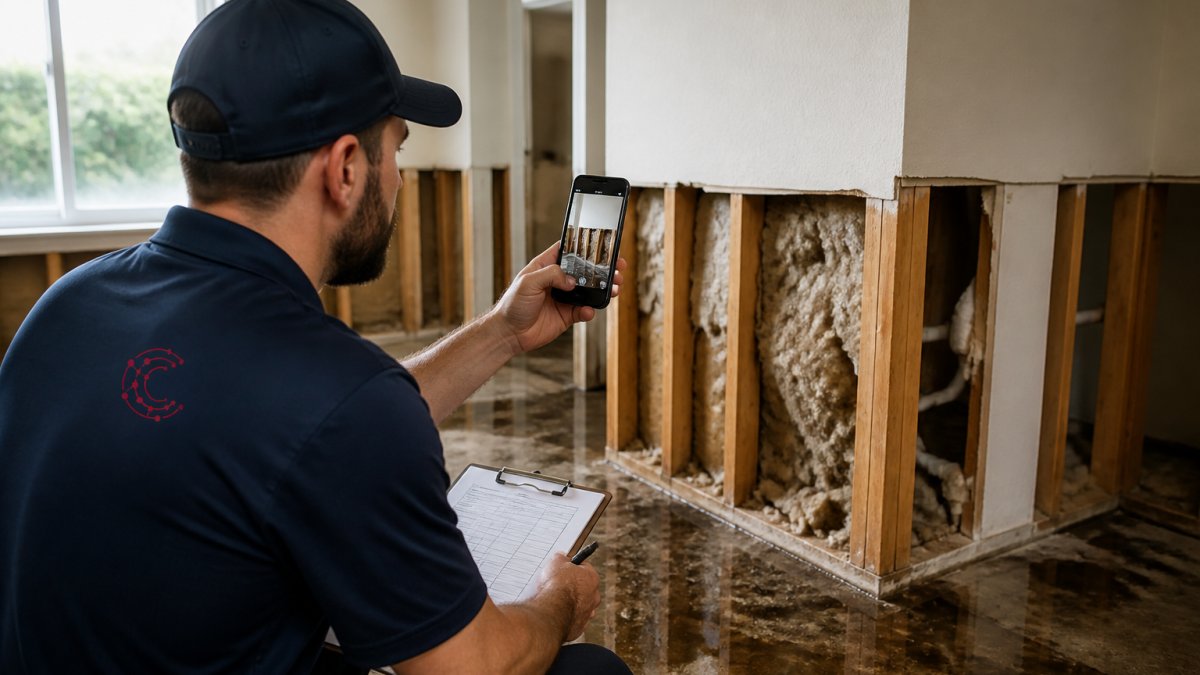
Start with a damage assessment checklist. Before the adjuster arrives, the contractor should have:
- Photos of every damaged surface from multiple angles
- Close-up photos showing the extent of damage
- Wide-angle photos showing the scope of affected areas
- Photos of undamaged areas for comparison
- Written notes describing damage type, location, and extent
- Measurements of affected areas where relevant
- Notes on secondary damage (water spreading to adjacent rooms, mold indicators, structural compromise)
The goal: Give the adjuster a complete picture before they inspect. If they find damage you missed, you'll know it immediately and can add it to the scope.
Organizing Evidence for Adjuster Review
Photos and notes are useless if they're scattered across devices and email threads. Organize them by room and damage type. Create a folder structure the adjuster can follow.
A simple system works:
- Main folder: Property address and claim number
- Subfolders: Kitchen, Bathroom, Bedroom, Living Areas, Exterior
- Within each: Before photos, damage close-ups, extent photos
Label each photo with date taken and brief description. Include a summary document listing all damage by location and type. This takes 30 minutes but saves days during adjuster review.
Tracking Documentation Changes and Version Control
Estimates change. Photos get added. Scope gets revised. Without version control, confusion spreads fast.
Keep a simple log:
- Original estimate date and total
- Supplemental estimate date and items added
- Reinspection date and any changes to scope
- Final approval date and approved amount
When the adjuster asks "What changed since last estimate?", you have a clear answer. This prevents delays caused by miscommunication about what's been approved and what hasn't.
Navigating the Insurance Claim Supplement Process When Initial Scope Falls Short
Supplemental estimates are common. They're not failures, they're corrections. But they only work if you know when to file them and how to challenge incomplete initial scopes.
When and Why Supplemental Estimates Become Necessary
A supplemental estimate is filed when the initial estimate missed damage. This happens for three reasons:
-
The initial inspection missed damage. Water damage spreads. Structural damage isn't visible until demolition starts. The adjuster's inspection found something the contractor's initial assessment didn't.
-
Damage was discovered during work. Once demolition begins, hidden damage appears. Mold behind walls. Structural rot. Damage to framing that wasn't visible from outside.
-
The scope was underestimated. The initial estimate listed repairs but underestimated labor, materials, or the complexity of the work.
A supplement isn't a failure. It's a correction. But it adds 5-10 days to the timeline because the adjuster has to review and approve the additional work.
How to Challenge Incomplete or Under-Scoped Estimates
Sometimes the adjuster's initial estimate is genuinely incomplete. They didn't see all the damage. They undervalued labor or materials. You need to challenge it.
Start with evidence. Photos showing the damage they missed. Comparisons showing similar repairs cost more. Industry standards for labor rates in your market.
Submit a detailed response to the adjuster. Point to specific items they underestimated. Provide photos and documentation. Explain why the estimate is incomplete.
Keep the tone professional. You're not arguing, you're providing information the adjuster missed.
Dispute Resolution and Escalation Paths
If the adjuster won't budge, escalation options exist. File a formal dispute with the insurance company. Request a second opinion from an independent adjuster. In some cases, hire a public adjuster to negotiate on your behalf.
These steps add time. But they're necessary when the adjuster's estimate is genuinely wrong. Document everything. Keep records of all communication. Build a case.
Using Restoration Project Documentation Software to Prevent Approval Failures
Manual documentation workflows fail because they're slow and prone to errors. Software fixes this.
Automating Evidence Collection and Organization
A documentation platform lets the contractor photograph damage on-site, tag it by location and type, and automatically organize it into a report. No manual folder creation. No scattered files.
The photos sync to the cloud. The adjuster can access them immediately. No delays waiting for files to be emailed or uploaded.
Real-Time Adjuster Communication and Status Tracking
When documentation is centralized, communication becomes real-time. The adjuster can see the damage photos and initial estimate immediately. They can request additional documentation through the platform. The contractor responds in hours, not days.
Status tracking shows where the project stands. Approved. Pending adjuster review. Waiting for homeowner decision. Supplement filed. This prevents the "Where are we in the process?" questions that waste time.
The platform captures damage documentation, organizes it, and manages communication with adjusters, all in one place. Projects move faster because nothing gets lost.
Responsibility Matrix: Who Owns Each Step of Approval
Approval failures often happen because nobody knows who's responsible. Clarify ownership.
| Step | Homeowner Responsibility | Contractor Responsibility | Adjuster Responsibility |
|---|---|---|---|
| Initial damage assessment | Provide access to property | Document all damage thoroughly | N/A |
| Estimate submission | Provide policy information | Submit detailed, complete estimate | Review estimate promptly |
| Adjuster inspection | Be present if possible | Prepare property for inspection | Inspect and document findings |
| Approval decision | Review and approve scope | Respond to adjuster questions | Make approval decision |
| Supplemental scope | Approve additional work | Submit supplement with evidence | Review and approve supplement |
| Final payment | Authorize payment | Complete work per scope | Release payment |
Homeowner Decisions That Delay or Block Approval
Homeowners control the approval process more than they realize. They decide whether to approve the scope. They decide whether to accept the out-of-pocket cost. They decide whether to proceed with work.
A homeowner who doesn't understand their policy will delay approval. A homeowner who doesn't trust the estimate will delay approval. A homeowner who's uncertain about the cost will delay approval.
The contractor's job is to explain clearly. Walk through the estimate. Show the damage photos. Explain what's covered and what isn't. Answer questions. Get clear approval before work starts.
Contractor Obligations Before and After Adjuster Inspection
The contractor owns documentation quality. Before the adjuster arrives, the damage assessment must be complete. Photos must be clear. Notes must be detailed. The estimate must be thorough.
After the adjuster inspects, the contractor must respond quickly to requests. If the adjuster asks for additional photos, provide them within 24 hours. If they request clarification on the estimate, respond immediately.
Speed here prevents delays. A contractor who responds slowly to adjuster requests will watch projects stall.
Adjuster and Insurer Actions That Stall Projects
Adjusters control approval timelines. A slow adjuster causes delays. An adjuster who requests incomplete information causes delays.
The contractor can't control the adjuster. But they can manage the relationship. Respond quickly. Provide complete documentation. Follow up professionally.
Restoration projects fail during insurance approval because documentation breaks down, communication stalls, and scope gaps widen.
Start with a complete damage assessment. Organize evidence centrally. Clarify who owns each step. Respond quickly to adjuster requests.
Cortex by JobDox simplifies this process.
Frequently Asked Questions
Why do insurance companies delay restoration approvals?
Delays occur when documentation is incomplete, scope of work is unclear, or communication gaps exist between the adjuster, contractor, and homeowner. Missing damage photos, disorganized evidence, or unresolved questions about coverage and deductibles also trigger reinspections that extend timelines. A clear insurance claim documentation checklist and organized evidence package reduce delays significantly.
What documentation does an insurer need to approve restoration work?
Insurers require detailed damage photos from multiple angles, an itemized scope of work with labor and material costs, proof of the damage cause, policy information, and the deductible amount. They also need contractor estimates, evidence of mitigation steps taken, and clear communication about any depreciation or coverage limits. Organized, time-stamped documentation speeds approval by preventing follow-up requests.
What should you do if an insurance company denies part of a restoration claim?
Request a detailed denial letter explaining the specific reason, coverage exclusion, depreciation, policy limits, or scope dispute. Gather additional evidence supporting the denied work, obtain a supplemental estimate from your contractor, and formally challenge the decision with the insurer. If the denial stands, you can file a complaint with your state's insurance commissioner or pursue appraisal or mediation under your policy terms.
How can restoration contractors reduce insurance claim delays?
Use a restoration project documentation software to automate photo capture, organize evidence, and track adjuster communication in real time. Create a standardized insurance claim documentation checklist for every job, maintain version control of scope changes, and establish clear communication protocols with adjusters. Proactively identify missed damage early and prepare supplemental estimates before the adjuster questions the scope.