 comparison
Albi vs DocuSketch: Restoration Contractors Compared
Table of Contents
- Feature Comparison Overview
- Accuracy and Measurement Precision
- Restoration Project Management Software Capabilities
- Restoration Documentation Best Practices in Each Platform
- AI-Powered Estimating for Restoration: How Each Handles Budget Prediction
- Pricing Models and Total Cost of Ownership
- Which Tool Fits Your Restoration Business
- Frequently Asked Questions
Last Updated: September 24, 2026
Feature Comparison Overview
Albi vs DocuSketch represents two fundamentally different approaches to restoration software. DocuSketch specializes in fast, accurate floor plans and visual documentation. Albi is a broader project management platform that includes documentation as part of a larger operational system.
For restoration contractors, this distinction matters: you need documentation, but also job costing, scheduling, adjuster communication, and budget tracking. The question is which platform solves more of your actual business problems.
Cortex by JobDox is an AI-native operations platform purpose-built for restoration contractors. Unlike tools that added restoration features later, Cortex automates the entire workflow: documentation, budget prediction, and adjuster communication. This matters because restoration work has unique demands, insurance requirements, tight timelines, and the need to recover money from adjusters.
Here's what separates these three approaches:
| Capability | DocuSketch | Albi | Cortex by JobDox |
|---|---|---|---|
| Floor Plan Generation | Specialized focus | Included feature | Integrated workflow |
| Budget Prediction | Manual | Basic tools | AI-powered |
| Adjuster Communication | Not included | Basic | Automated drafting |
| Project Management | Not included | Full system | Full system + AI |
| Documentation Workflow | Visual-first | Process-first | End-to-end automation |
| Best For | Speed of sketching | Mid-market contractors | Scaling restoration firms |
Accuracy and Measurement Precision
Measurement accuracy depends on technology, hardware, and integration into your estimating workflow. A 2% error on a 5,000 sq ft water damage job can mean a $1,500-$3,000 swing in your estimate.
DocuSketch's Measurement Approach
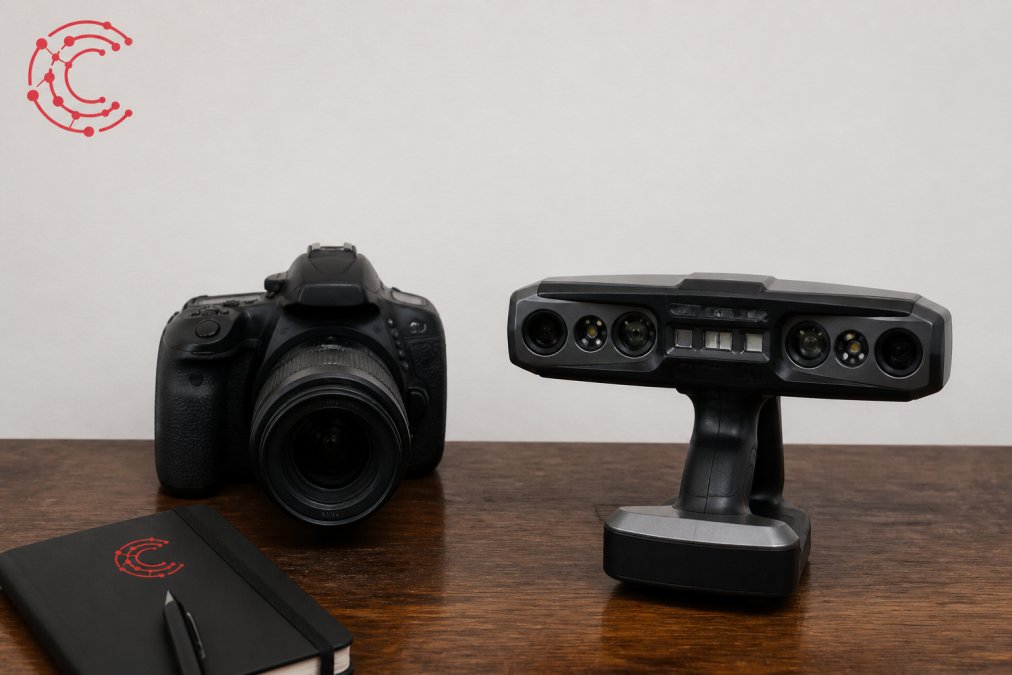
DocuSketch uses managed LiDAR scans and AI-powered floor plan generation with ±1 inch accuracy for residential properties under 10,000 sq ft. The trade-off: 24-48 hour processing time. For same-day documentation needs, this creates friction. For contractors who can batch scans, the accuracy and speed beat hand-sketching.
DocuSketch requires iPhone 12 Pro or later (with built-in LiDAR) or external scanners like Matterport Pro2 or Leica BLK360. Older Android devices without LiDAR require hardware upgrades or reliance on managed scan services.
Albi's Measurement Workflow
Albi captures measurements through manual field workflows: photos, tape measures, and app input. Accuracy depends entirely on technician attention. Albi doesn't enforce standards or flag inconsistencies in real-time, so errors slip through until office review.
Albi runs on any iOS 14+ or Android 10+ device with no specialized hardware required. This is a significant advantage for contractors with mixed device fleets or budget constraints.
Cortex by JobDox's Measurement and Validation
Cortex by JobDox applies AI-powered validation to flag measurement inconsistencies before estimating. The system cross-references dimensions against photo evidence and historical data, catching errors like a 2,000 sq ft home with a single 8-foot hallway.
Cortex runs on iOS 13+ and Android 9+, compatible with older devices than DocuSketch. Optional LiDAR integration is available but not required, allowing deployment across mixed fleets without forced upgrades.
Measurement Accuracy in Practice
When comparing Albi vs DocuSketch, the accuracy question is: do we catch errors before they become budget problems? DocuSketch wins on precision and speed with 24-48 hour turnaround. Albi requires field discipline but offers real-time capture. Cortex by JobDox captures in real-time and validates against AI patterns, catching errors that slip through Albi.
Hardware compatibility matters: if 30% of your crew uses older Android devices, DocuSketch's LiDAR requirement creates a deployment barrier. Albi and Cortex by JobDox work on older hardware, reducing implementation cost and speeding adoption.
Restoration Project Management Software Capabilities
DocuSketch accelerates the survey and sketch phase but doesn't manage scheduling, crew management, invoicing, or adjuster tracking. For standalone use, you're building a patchwork system.
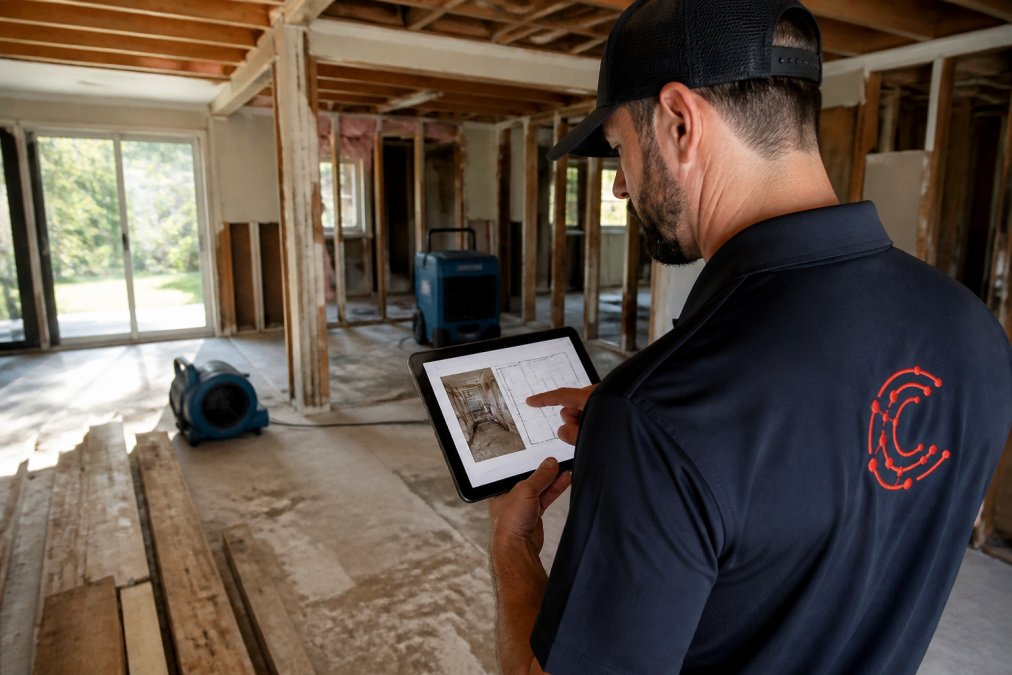
Albi is a full project management platform handling scheduling, crew assignment, invoicing, and communication. For mid-market firms (15-40 employees), it provides the operational backbone. Documentation tools are included but not specialized for restoration, so you compromise on documentation speed and precision.
Cortex by JobDox automates the entire restoration workflow: documentation, scheduling, crew management, adjuster communication, and budget tracking on one AI-native platform. The Cortex Copilot answers crew and financial questions in plain English, reducing admin time on data pulls. The platform also converts won jobs into search-optimized local landing pages for customer acquisition.
DocuSketch solves documentation. Albi solves project management. Cortex by JobDox solves overhead inefficiencies that drain profit margins.
Restoration Documentation Best Practices in Each Platform
Documentation serves multiple audiences: your team for job execution, adjusters for claim validation, and your business for billing and compliance.
DocuSketch optimizes for adjuster-ready documentation with visual floor plans and annotated sketches. If your goal is faster adjuster approval, DocuSketch delivers through managed scan services that don't rely on field technician image quality.
Albi treats documentation as part of the broader project workflow, keeping site information, photos, and measurements in one place. But the process isn't optimized for restoration's specific needs, it's generic project documentation.
Cortex by JobDox automates documentation workflows based on job type, learning your standards and building them into workflows automatically.
AI-Powered Estimating for Restoration: How Each Handles Budget Prediction
DocuSketch doesn't handle estimating, it's purely documentation. Budget prediction requires separate software.
Pricing Models and Total Cost of Ownership
Total cost of ownership includes hardware, integration fees, training, and labor savings, not just monthly fees. Here's how each platform stacks up over 3 years:
DocuSketch Pricing and Hidden Costs
Hidden costs to factor in:
- Hardware investment: If your crew doesn't have iPhone 12 Pro or later (which includes LiDAR), you'll need to purchase compatible devices. An iPhone 14 Pro costs approximately $1,099 per device. For a 10-person crew, that's $10,990 upfront. External LiDAR scanners (Matterport Pro2, Leica BLK360) range from $3,995-$9,995 per unit.
- Integration fees: DocuSketch integrates with some estimating platforms (Xactimate, Symbio) but not all. If your current workflow uses different software, you may need to purchase integration middleware or manually export/import data, adding $50-$200 per month in labor time.
- Training time: Field crews need 4-6 hours of training to use LiDAR hardware effectively. For a 10-person crew at $25/hour, that's $1,000-$1,500 in labor.
3-year TCO for DocuSketch (10-person crew, 15 scans/month):
- Software: $7,164-$8,964
- Hardware (if upgrading): $10,990
- Integration/labor: $1,800-$7,200
- Training: $1,000-$1,500
- Total: $20,954-$29,654
Albi Pricing and Hidden Costs
Hidden costs to factor in:
- Hardware investment: Minimal. Albi runs on any modern smartphone, so no forced upgrades unless your fleet is very old (pre-2018). Budget $0-$2,000 for device refreshes.
- Integration fees: Albi integrates with QuickBooks, Xactimate, and several CRM platforms. Most integrations are included, but custom API connections may cost $500-$2,000 one-time.
- Training and onboarding: Albi requires 8-12 hours of team training because it's a full project management platform, not just a documentation tool. For a 25-person team at $25/hour average, that's $5,000-$7,500 in labor.
- Data migration: Moving existing job data from your current system into Albi typically requires 40-80 hours of IT work. Budget $2,000-$4,000.
3-year TCO for Albi (25-person crew):
- Software: $31,500
- Hardware: $0-$2,000
- Integration: $0-$2,000
- Training: $5,000-$7,500
- Data migration: $2,000-$4,000
- Total: $38,500-$47,000
Cortex by JobDox Pricing and Hidden Costs
Hidden costs and labor savings:
- Hardware investment: Minimal. Cortex runs on any modern iOS or Android device. Budget $0-$1,500 for device refreshes.
- Integration fees: Cortex integrates with QuickBooks and Xactimate. Custom integrations are rare because the platform covers most restoration workflows natively.
- Training and onboarding: 6-8 hours for field crews, 4-6 hours for office staff.
- Labor savings from automation: This is where Cortex's ROI becomes compelling. By automating documentation workflows, adjuster communication, and budget prediction, Cortex reduces administrative overhead.
3-year TCO for Cortex by JobDox (25-person crew, accounting for 20% overhead reduction):
- Software: See Cortex by JobDox pricing page
- Hardware: $0-$1,500
- Integration: $0
- Training: $2,500-$3,500
- Subtotal: See Cortex by JobDox pricing page for software costs, plus hardware and training.
-
- Net cost: Varies based on software costs, hardware, training, and labor savings.
Which Model Makes Sense for Your Firm
Which Tool Fits Your Restoration Business
Choose DocuSketch if your primary pain point is the speed and accuracy of on-site documentation. You have a functioning project management system already, and you need to accelerate the survey phase. The tool solves that problem exceptionally well.
Frequently Asked Questions
What is the best software for restoration contractors managing multiple projects?
The best choice depends on whether you prioritize documentation speed or full-scale restoration project management software. DocuSketch excels at rapid floor plan sketching and visual documentation for adjusters. Albi offers broader project oversight, scheduling, and team coordination. For contractors managing 10-50 employees across multiple concurrent projects, a platform with integrated scheduling, budget tracking, and communication workflows typically delivers more value than documentation tools alone.
How do Albi and DocuSketch differ in restoration documentation best practices?
DocuSketch is built specifically for the documentation phase: rapid site surveys, floor plans, and property sketches. It prioritizes speed and visual accuracy for adjuster reports. Albi integrates documentation into a broader workflow that includes project tracking, team scheduling, and financial oversight. For restoration documentation best practices, DocuSketch specializes in the sketch-to-report phase, while Albi embeds documentation within an end-to-end project lifecycle.
Does either platform offer AI-powered estimating for restoration jobs?
Cortex by JobDox uses AI to predict budgets and flag overruns early, learning from historical jobs, material costs, crew productivity, and market conditions. DocuSketch focuses on documentation and measurement accuracy but does not emphasize AI-powered estimating capabilities. If AI-powered estimating for restoration is critical to your workflow, Cortex by JobDox's predictive features address that need directly, while DocuSketch would require integration with a separate estimating tool.
What are the main differences in field workflow and ease of use?
DocuSketch is optimized for mobile field use with AR scanning and rapid floor plan generation, making it ideal for technicians working on-site. Albi provides broader operational management but may require more setup and training for full team adoption. If your primary pain point is slow field documentation, DocuSketch delivers immediate speed gains. If you need to streamline scheduling, communication, and project oversight across your entire team, Albi's integrated approach may offset a steeper learning curve.
Restoration contractors face a choice: optimize individual workflows or automate the entire operation. Cortex by JobDox automates documentation, predicts project budgets, drafts adjuster responses to recover more money, and reduces overhead inefficiencies, all on one AI-native platform purpose-built for your industry. Start your free 14-day trial and see how much overhead time you can eliminate from your next five jobs.