
 how-to
Handle Insurance Claim Supplements for Water Damage
Table of Contents
- What an Insurance Claim Supplement Is and Why Water Damage Requires One
- Water Damage Insurance Claim Documentation: Capture Everything Before It's Gone
- Mitigate Further Loss and Document Mitigation Efforts
- How to Write an Insurance Supplement Request That Gets Approved
- Water Damage Supplement Estimate Example and Submission Checklist
- Insurance Claim Supplement Process for Contractors: Step-by-Step Submission
- Handle Denials and Disputes: Escalation and Independent Estimates
- Common Mistakes That Cost You Money on Water Damage Claims
- Frequently Asked Questions
Last Updated: October 6, 2026
What an Insurance Claim Supplement Is and Why Water Damage Requires One
Unlike a visible roof leak, water infiltrates walls, crawl spaces, and insulation. Initial estimates capture only what the adjuster sees during a brief site visit, missing damage behind drywall, under flooring, and inside HVAC systems.
Most insurance claim supplements water damage requests require at least one submission; some require two or three as hidden damage emerges during mitigation.
Cortex by JobDox automates this documentation, capturing photos and estimates in one searchable system instead of across email and spreadsheets.
Water Damage Insurance Claim Documentation: Capture Everything Before It's Gone
Photograph and video evidence
Photographs and video are your strongest evidence. Adjusters decide based on what they see: if you don't document it, it doesn't exist in their file.
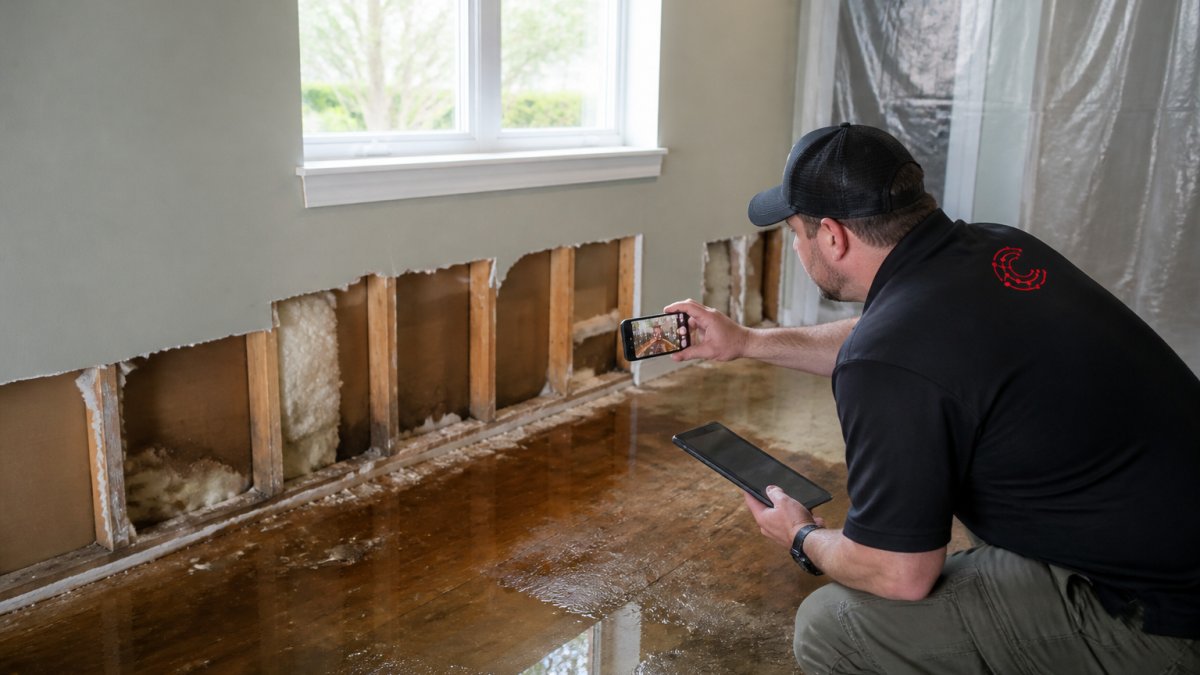
Start photographing immediately after water damage occurs. Take photos of:
- Standing water and wet surfaces
- Stained drywall and baseboards
- Wet carpet and padding
- Discolored insulation visible in attics or crawl spaces
- Damaged furniture, appliances, and personal items
- The water source (burst pipe, failed sump pump, roof penetration)
Use your smartphone; modern phones capture enough detail. Take wide shots of each room, then close-ups, including a ruler or object of known size so adjusters can estimate damage area.
Video is underrated: a 30-second pan across a wet basement tells the story better than ten stills. Narrate what you see: "This is the master bedroom. Water entered through the window well.
Moisture detection and hidden damage
This is where most initial estimates fail. Moisture meters detect water inside walls, under flooring, and in insulation that the naked eye cannot see, proving hidden damage exists.
Rent or purchase a moisture meter (basic models cost under $50). Check:
- Interior walls at ground level and above
- Subfloors under carpet and tile
- Insulation in attics and crawl spaces
- Wooden framing and joists
- HVAC ducts and ductwork
Record every reading, photograph the meter display, and note the location, reading, and date. This timestamped record justifies additional repair costs in your supplement.
Hidden damage often includes:
- Mold growth beginning inside walls (not yet visible)
- Structural wood softening and losing strength
- Electrical wiring corrosion and short-circuit risk
- Insulation saturation reducing R-value effectiveness
- Subflooring delamination and cupping
Adjusters understand moisture inside walls must be addressed. An 18% reading in a wall cavity (normal is 8-12%) tells the adjuster that section must be opened, dried, and potentially replaced, driving supplement amounts from hundreds to thousands of dollars.
Mitigate Further Loss and Document Mitigation Efforts
Your policy requires reasonable steps to prevent additional damage, called the "duty to mitigate." It protects your claim and creates a paper trail that strengthens your supplement request.
Mitigation includes:
- Stopping the water source (turning off the water main, sealing the roof breach)
- Removing standing water (wet extraction and pumping)
- Running dehumidifiers and air movers to dry the space
- Removing wet materials before mold develops
- Covering openings to prevent weather intrusion
- Shutting off electricity to wet areas for safety
Document every mitigation step with photos and timestamps, including equipment in place and before-and-after shots, to show the adjuster you acted responsibly.
Keep receipts for all mitigation work and equipment rental. These costs are often recoverable under the "mitigation" or "emergency services" portion of your policy, so include them in your supplement.
How to Write an Insurance Supplement Request That Gets Approved
Structure your supplement narrative
Your supplement request is a formal document. It needs structure so adjusters can follow your logic.
Open with a summary statement:
"This supplement documents additional damage discovered during the mitigation and inspection phase. Initial estimate [initial estimate number] captured visible damage only. Subsequent investigation revealed hidden moisture, structural damage, and additional contents damage not included in the original scope."
Then organize the body by damage category:
- Structural damage: List each area (walls, subfloor, framing) with moisture readings, photos, and repair costs
- Contents damage: List damaged items with replacement costs
- Additional living expenses: If the property is uninhabitable, document hotel and meal costs
- Mitigation costs: List equipment rental, labor, and materials
For each item, use this format:
- Location and description
- Moisture reading or photo evidence
- Why it wasn't in the original estimate
- Repair method and cost
Example:
"Master bedroom subfloor: Moisture reading 22% (normal: 8-12%). Photo #47 shows staining and soft spots. Original estimate did not include subfloor inspection. Subfloor must be removed and replaced. Cost: $2,400."
Line-item accuracy and scope of work
Adjusters scrutinize line items. Vague descriptions trigger denials or reductions. Specific, itemized descriptions get paid.
Instead of: "Water damage restoration: $5,000"
Write:
- Remove and dispose of wet carpet (800 sq ft): $1,200
- Remove and dispose of wet padding (800 sq ft): $400
- Extract water from subfloor: $800
- Dry subfloor with equipment (7 days): $1,400
- Replace subfloor (800 sq ft): $2,200
- Total: $6,000
Each line item needs:
- Specific quantity (square footage, linear feet, number of items)
- Clear description of work
- Labor rate or flat fee
- Material cost if applicable
Adjusters compare your line items against industry standards: reasonable numbers get approved, inflated ones get reduced or denied.
Water Damage Supplement Estimate Example and Submission Checklist
Sample estimate format and what adjusters expect
Here's what a strong water damage supplement estimate looks like:
| Item | Quantity | Unit | Rate | Total |
|---|---|---|---|---|
| Water extraction | 800 sq ft | per sq ft | $0.50 | $400 |
| Equipment rental (dehumidifiers, air movers) | 7 days | per day | $150 | $1,050 |
| Moisture testing | 12 locations | per test | $25 | $300 |
| Drywall removal and disposal | 240 sq ft | per sq ft | $2.50 | $600 |
| Subfloor removal and disposal | 400 sq ft | per sq ft | $3.00 | $1,200 |
| Framing inspection and repair | 80 linear feet | per foot | $15 | $1,200 |
| Mold remediation (if needed) | 200 sq ft | per sq ft | $8 | $1,600 |
| Rebuild and finishing | 400 sq ft | per sq ft | $12 | $4,800 |
Adjusters expect an itemized breakdown (not lump sums), quantity measurements (square footage, linear feet), unit rates tied to industry standards, photo evidence for each major line item, and moisture readings supporting hidden damage claims.
Supporting documents required for approval
Your supplement request must include:
- Original estimate from the initial adjuster visit
- Your detailed supplement estimate (itemized as shown above)
- Photographs of damage (before mitigation, during inspection, close-ups of specific areas)
- Moisture meter readings with timestamps and locations
- Video documentation of damage
- Receipts for mitigation work and equipment rental
- Contractor quotes if using an external restoration company
- Proof of additional living expenses (hotel bills, meal receipts) if applicable
- Updated scope of work showing what was missed
Organize these documents in a single PDF or folder, number the photos, and reference them in your written estimate so the adjuster finds everything needed to approve payment.
Insurance Claim Supplement Process for Contractors: Step-by-Step Submission
Timing and policy deadlines
Timing matters. Most policies require damage notification within 30-60 days, and supplements must be filed before the claim closes.
Here's the typical timeline:
- Day 1-3: Damage occurs and is reported to insurer
- Day 3-7: Adjuster inspects and issues initial estimate
- Day 7-14: Mitigation work begins; you document hidden damage
- Day 14-21: You prepare and submit supplement request
- Day 21-35: Adjuster reviews supplement and approves or requests more information
- Day 35-45: Approved supplement payment is issued
The longer you wait, the closer you get to claim closure, and reopening a closed claim is difficult. File your supplement within 14 days of discovering additional damage.
Check your policy for specific deadlines. Some give you 90 days to file a supplement; others require it within 30 days of the initial estimate. Know your deadline and work backward.
Submitting and tracking supplement approval
Submit your supplement in writing. Email works with a read receipt, but the insurer's online portal is better because it creates a timestamped record.
Your submission should include:
- A cover letter explaining what's new in the supplement
- The itemized estimate
- All supporting documents (photos, moisture readings, receipts)
Example cover letter:
"Dear [Adjuster Name], Please find attached our supplement to claim #[claim number]. During mitigation and structural inspection, we discovered hidden moisture damage and additional contents damage not included in the initial estimate. This supplement documents those findings with moisture readings, photographs, and updated repair costs. We request approval and payment of the supplement amount. Please contact us if you need additional information."
Follow up in writing within 5 business days: "We submitted a supplement on [date]. Please confirm receipt and let us know the timeline for review."
Track the supplement status and document every communication. If the adjuster denies or reduces it, ask for a written explanation, your roadmap for the next step: dispute or independent estimate.
Handle Denials and Disputes: Escalation and Independent Estimates
Supplement denials happen. The adjuster may claim the damage was pre-existing, that mitigation should have prevented it, or that your costs are inflated. When that occurs, you have options.
Request a written denial explanation. Never accept a verbal "no." Ask the adjuster to explain in writing why each line item was denied.
Challenge specific denials. If the adjuster denies a line item as "not covered," respond with your policy language showing it is covered.
To request appraisal, send written notice to the insurer: "We request appraisal of claim #[number] per the appraisal clause in our policy.
The insurer selects an appraiser (or you each select one, and those two select a third). The appraisal process typically takes 30-60 days.
Common Mistakes That Cost You Money on Water Damage Claims
Mistake 1: Not documenting damage before mitigation. Once water is extracted and walls are dried, hidden damage becomes invisible.
Mistake 2: Filing the supplement too late. Claims close, and reopening is difficult and slow.
Mistake 3: Submitting vague estimates. "Water damage restoration: $8,000" gets denied. Itemized estimates get approved.
Mistake 4: Ignoring moisture readings. A moisture meter is your best evidence. Adjusters trust numbers more than opinions.
Mistake 6: Not keeping receipts for mitigation work. You can recover mitigation costs, but only with proof.
Mistake 7: Accepting the first adjuster's estimate without question. Adjusters make mistakes: they miss areas, underestimate labor, or use outdated pricing.
Frequently Asked Questions
What should a water damage insurance supplement include?
A water damage insurance supplement must include detailed documentation of additional damage discovered after the initial estimate, a revised scope of work with line-item costs, before-and-after photographs and videos, invoices or quotes from contractors, evidence of mitigation efforts, and an explanation of why the additional damage justifies the supplement request. Include specific details about moisture detection, structural damage, mold prevention measures, and any hidden damage found during restoration work. Organize supporting documents chronologically and reference them in your narrative to help the adjuster understand the claim file progression.
How do you submit a supplement for a water damage insurance claim?
Submit your water damage insurance supplement by gathering all supporting documentation, organizing it in a clear claim file, and sending it to your assigned insurance adjuster through their preferred method (email, online portal, or mail). Include a cover letter summarizing the additional damage, reference the original claim number, and attach photographs, repair estimates, invoices, and mitigation documentation. Track submission dates and follow up within 5-7 business days. Many insurers have specific deadlines for supplements, typically 30-90 days after loss, so verify your policy and adjuster's timeline before submitting.
Why might an insurer deny a water damage claim supplement?
Insurers deny water damage supplements when documentation is incomplete, estimates appear inflated or lack supporting evidence, the additional damage falls outside policy coverage (e.g., flood damage, pre-existing conditions), the supplement is submitted after the policy deadline, or the adjuster determines the damage was preventable through proper mitigation. Denials also occur when line items lack detail, contractor invoices are missing, or the scope of work doesn't match the photographic evidence. Respond to a denial by requesting a detailed explanation in writing, gathering an independent estimate, and escalating to your state insurance commissioner if you believe the denial is unreasonable.
What types of water damage are not covered by insurance?
Standard homeowners and commercial property policies typically exclude flood damage (which requires separate flood insurance), damage from poor maintenance or gradual leaks, water damage from sewage backups (unless endorsement is added), and damage from external water events not caused by a covered peril. Policies also exclude damage from lack of maintenance, such as burst pipes that could have been prevented by winterization. Review your specific policy language and exclusions before submitting a supplement, and discuss coverage boundaries with your adjuster to avoid submitting claims for damage that won't be approved. Some policies offer optional endorsements to cover excluded water events.